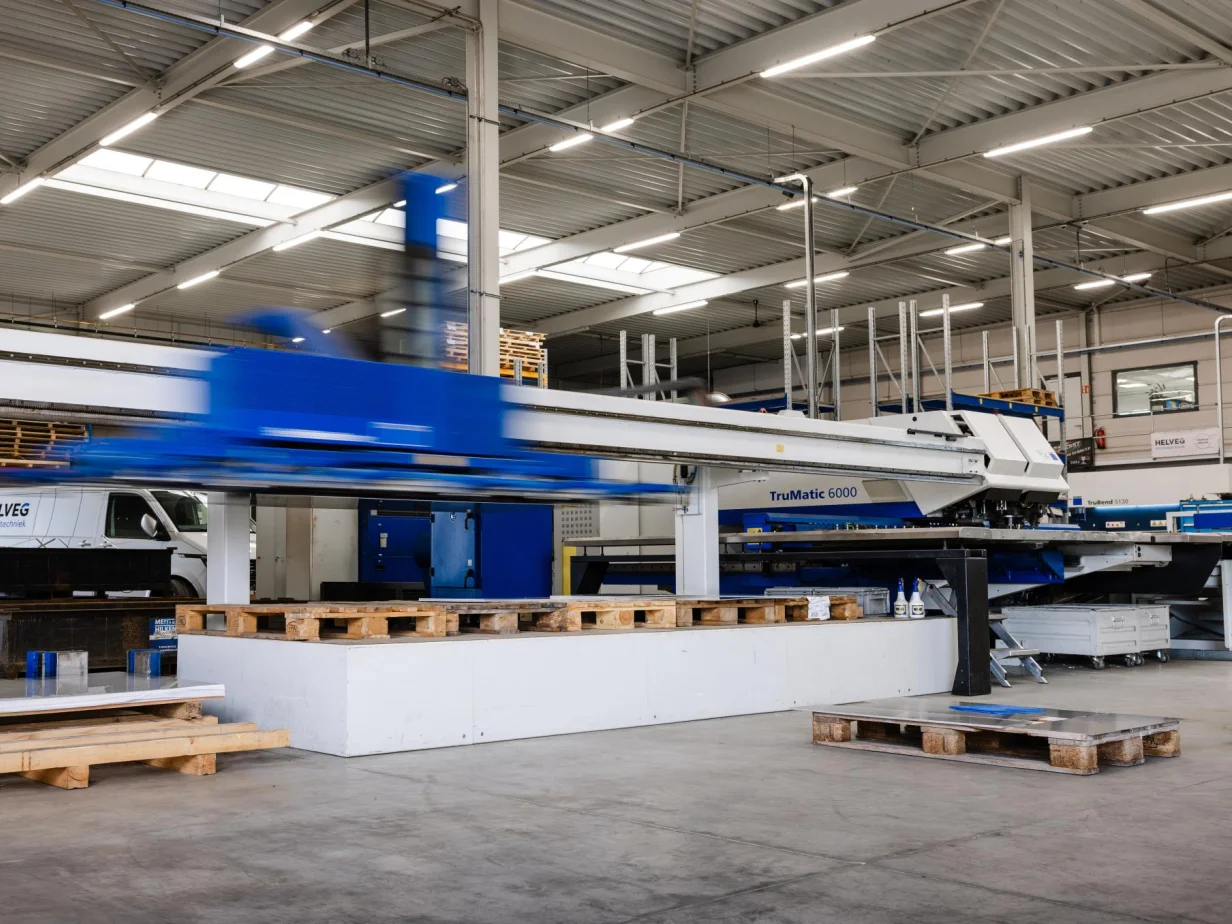
Ponsen & lasersnijden
Met onze TruMatic 6000 FMC pons-lasercombinatie kunnen we meerdere bewerkingen in één proces uitvoeren. Lasersnijden, ponsen, omvormen en schroefdraden maken worden gecombineerd in één opspanning. Dat zorgt voor een efficiënt proces, minder handelingen en maatvaste onderdelen.

Hoge variatie
We bewerken zowel ferro- als non-ferrometalen, waarbij uiteraard met gescheiden gereedschappen wordt gewerkt. Denk aan materialen zoals staal, roestvrij staal en aluminium. Plaatafmetingen tot 3000 × 1500 mm en materiaaldiktes tot 8 mm kunnen we probleemloos verwerken.
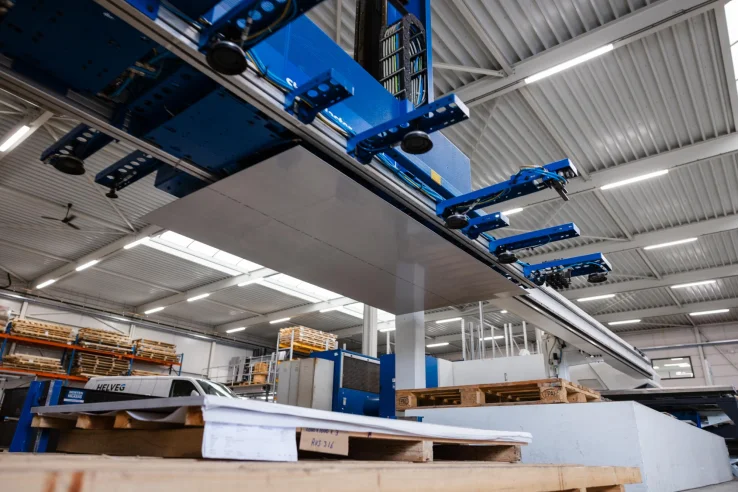

TruMatic 6000 FMC laser-ponscombinatie
- Laservermogen 2700 W
- Max. plaatformaat 3000 × 1500 mm
- Max. plaatdikte staal 8 mm
- Max. plaatdikte RVS 8 mm
- Max. plaatdikte aluminium 3 mm
- Max. ponskracht 220 kN
- Gereedschaprevolver tot 22 stations
- Automatische gereedschapswissel
- Gecombineerd laser- en ponsproces
- Geschikt voor complexe plaatwerkonderdelen in één opspanning
Test
-
What is a VPN and why is it used?
A VPN (Virtual Private Network) extends a private network across a public network, allowing users to send and receive data as if their computing devices were directly connected to the private network. It is used for secure and encrypted connections, ensuring privacy and security.
-
What is an API?
An API (Application Programming Interface) is a set of rules and definitions that allows different software applications to communicate with each other. It defines methods and data formats for interacting with a software component or system.
-
What is an IP address?
An IP (Internet Protocol) address is a unique string of numbers separated by periods (IPv4) or colons (IPv6) that identifies each computer using the Internet Protocol to communicate over a network.
-
What is blockchain technology?
Blockchain is a distributed ledger technology that records transactions across many computers so that the record cannot be altered retroactively without altering all subsequent blocks and the consensus of the network. It is the underlying technology behind cryptocurrencies like Bitcoin.